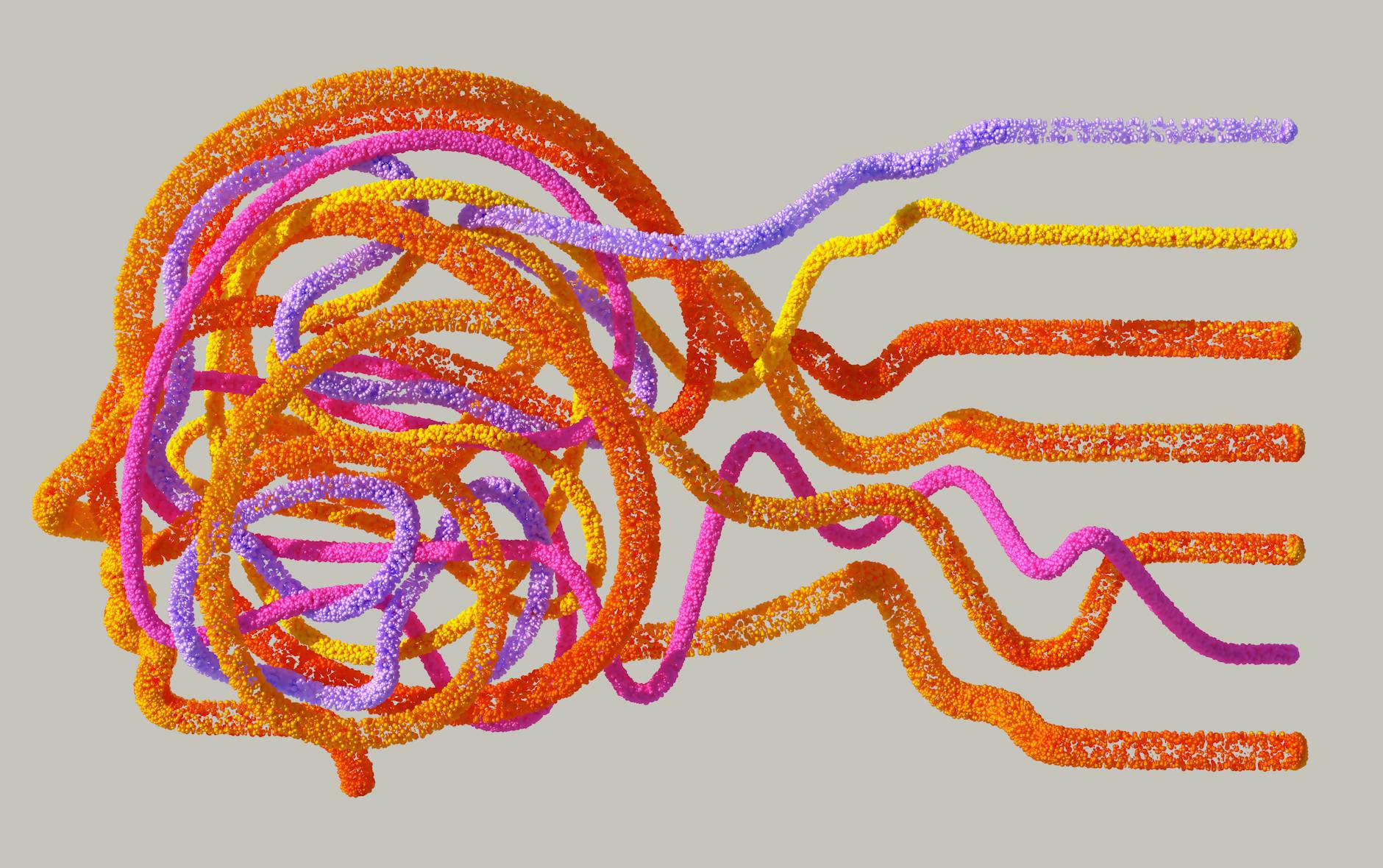
IIT Guwahati researchers develop energy-efficient brain-inspired AI
Researchers at IIT Guwahati have created a brain-inspired AI model that processes long data sequences efficiently while consuming less energy than conventional methods.

Brain-inspired AI for efficient data processing
Researchers at the Indian Institute of Technology Guwahati have developed a brain-inspired artificial intelligence model that processes long sequences of data more efficiently than conventional approaches while consuming significantly less energy. The model, called 'Spiking Heterogeneous Harmonic Resonate-and-Fire State Space Model' (SH2RFSSM), was presented at the International Conference on Machine Learning (ICML) 2026 in Seoul.
How the model works
The SH2RFSSM architecture mimics the event-driven communication of biological neurons. Unlike conventional neural networks that process information continuously, this model activates only when meaningful events occur, enabling sparse and energy-efficient computation. The team combined this spiking neural network approach with advanced state space modeling to learn long-range patterns without the heavy computational cost of traditional sequence models.
Potential applications
According to the researchers, the model has significant potential in sectors requiring continuous data analysis. These include wearable health monitoring systems, IoT sensors, smart manufacturing, environmental monitoring, autonomous systems, and long-term forecasting applications. Reduced computational load could extend battery life in devices and enable more AI processing directly on hardware without heavy reliance on cloud computing.
The research team
The work was conducted by researchers from IIT Guwahati's SustainAI Lab and Mehta Family School of Data Science and Artificial Intelligence. The team included Kartikay Agrawal, Vaishnavi Nagabhushana, Abhijeet Vikram, Vedant Sharma, and Ayon Borthakur. The findings were presented as a poster at ICML 2026 by Agrawal, Nagabhushana, and Borthakur on July 7 at the COEX Convention and Exhibition Centre in Seoul.
Addressing computational challenges
Dr. Ayon Borthakur, Assistant Professor at IIT Guwahati, explained the motivation behind the research: "Modern AI systems increasingly rely on analyzing long streams of sequential data such as health signals from wearable devices, environmental sensor readings, industrial monitoring data, and weather or traffic forecasts. However, widely used AI architectures often become computationally expensive as the length of data increases, making them less suitable for battery-powered and resource-constrained devices."
Technical advantages
Kartikay Agrawal, a PhD Research Scholar on the team, highlighted the model's technical advantages: "We combined the energy-efficient principles of spiking neural networks with state space modeling to create a system that can learn long-range patterns without the heavy computational cost associated with traditional sequence models." The approach differs from conventional neural networks by processing information only when necessary, similar to how biological neurons communicate.
Next steps for implementation
The research demonstrates potential for more efficient AI processing in edge devices, though real-world implementation would require further development and testing. Organizations working with sequential data processing in resource-constrained environments may want to monitor this research direction for potential energy savings and performance improvements in their systems.